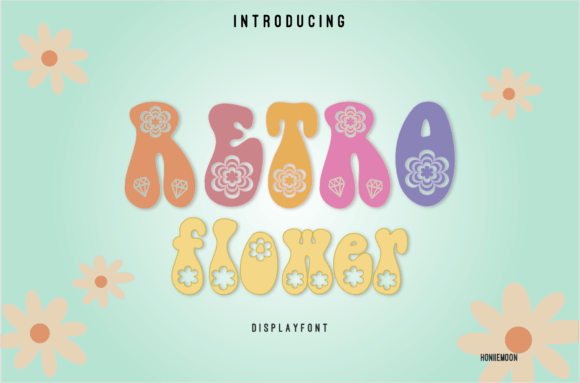
Retro Flower: A Playful Font for Bold Campaigns
It was 9 a.m. on a Thursday, and I was staring at my screen, trying to finalize the visual assets for a new product launch. The client wanted something vibrant, attention-grabbing, and undeniably fun. My usual go-to fonts had started to feel flat, and I needed a spark. That’s when I stumbled upon Retro Flower. It wasn’t just any display font—it was a mood, a vibe, and a visual shortcut to making messages pop.
Retro Flower is a cool and fun display font that blends cuteness with boldness. Its playful curves and floral flourishes give it a jolly personality that feels like a warm hug from a vintage poster. Whether you're designing for a seasonal sale or a whimsical brand campaign, this font brings a sense of nostalgia and charm that's hard to ignore.
I decided to test it out on a few key visuals. First, the main launch graphic. I used Retro Flower for the headline, “Introducing Our New Collection,” and immediately noticed how it drew the eye. It didn’t scream; it invited. The soft yet colorful strokes felt like a gentle nudge toward curiosity. For the mobile preview, I paired it with a clean sans serif font for the supporting text. The contrast made everything feel balanced and readable, even on smaller screens.
Next up were the Instagram posts. Each post in the series needed a unique look but still had to maintain a cohesive brand voice. Using Retro Flower for the titles—“Spring into Style,” “Floral Fashion,” “Bloom with Us”—gave each image a consistent tone while keeping things fresh. The font’s decorative elements worked well as overlays on bright backgrounds, and it looked surprisingly good on dark tones too, which was a bonus for nighttime posts.
For Pinterest pins, I leaned into the floral theme more. I created a set of quote graphics using Retro Flower for the text, pairing it with pastel illustrations and muted gradients. The result? A collection that felt both modern and timeless. Users pinned them instantly, and the engagement metrics were better than expected.
One of the most surprising uses came when designing a webinar banner. The title “Join Us for an Exclusive Design Workshop” needed to be inviting without being overwhelming. Retro Flower gave it that friendly, approachable edge. It turned what could have been a generic CTA into a call to action that felt personal and exciting.
When working with Retro Flower, I found that it works best for short headlines, callouts, and decorative titles. It’s not ideal for long blocks of text due to its stylized nature, but as a display font, it shines in logos, campaign labels, and branded templates. I often use it for hero sections on landing pages, where it helps establish a strong first impression and reinforces brand recognition.
Readability is key, especially on mobile devices and in fast-scrolling feeds. I recommend keeping the text size large enough to ensure legibility and avoiding overly complex backgrounds that might clash with the font’s details. When using Retro Flower on thumbnails or social media previews, I always check how it looks at smaller sizes. Sometimes, a subtle adjustment in spacing or color can make all the difference.
Font pairing is another area where Retro Flower really shines. I’ve found that it pairs beautifully with minimalist sans serif fonts like Helvetica Neue or Montserrat. The contrast between the playful curves and clean lines adds visual interest without overwhelming the design. For a more elegant look, a serif font like Georgia or Baskerville can work wonders, especially in editorial or packaging designs.
Before diving into a campaign, I always double-check the font’s features. Retro Flower comes with a variety of styles, alternates, and ligatures that can add depth to your designs. It supports multiple languages and has commercial licensing, which is essential when creating ads, merchandise, or digital products. Knowing these details ahead of time saves time later and ensures that your project stays compliant and professional.
Whether you're launching a product, promoting a sale, or building a content series, Retro Flower offers a versatile and engaging way to elevate your visuals. It doesn’t just add style—it enhances clarity, strengthens your message, and makes your brand stand out in a sea of static designs. And honestly, that’s exactly what every marketer needs in their toolkit.